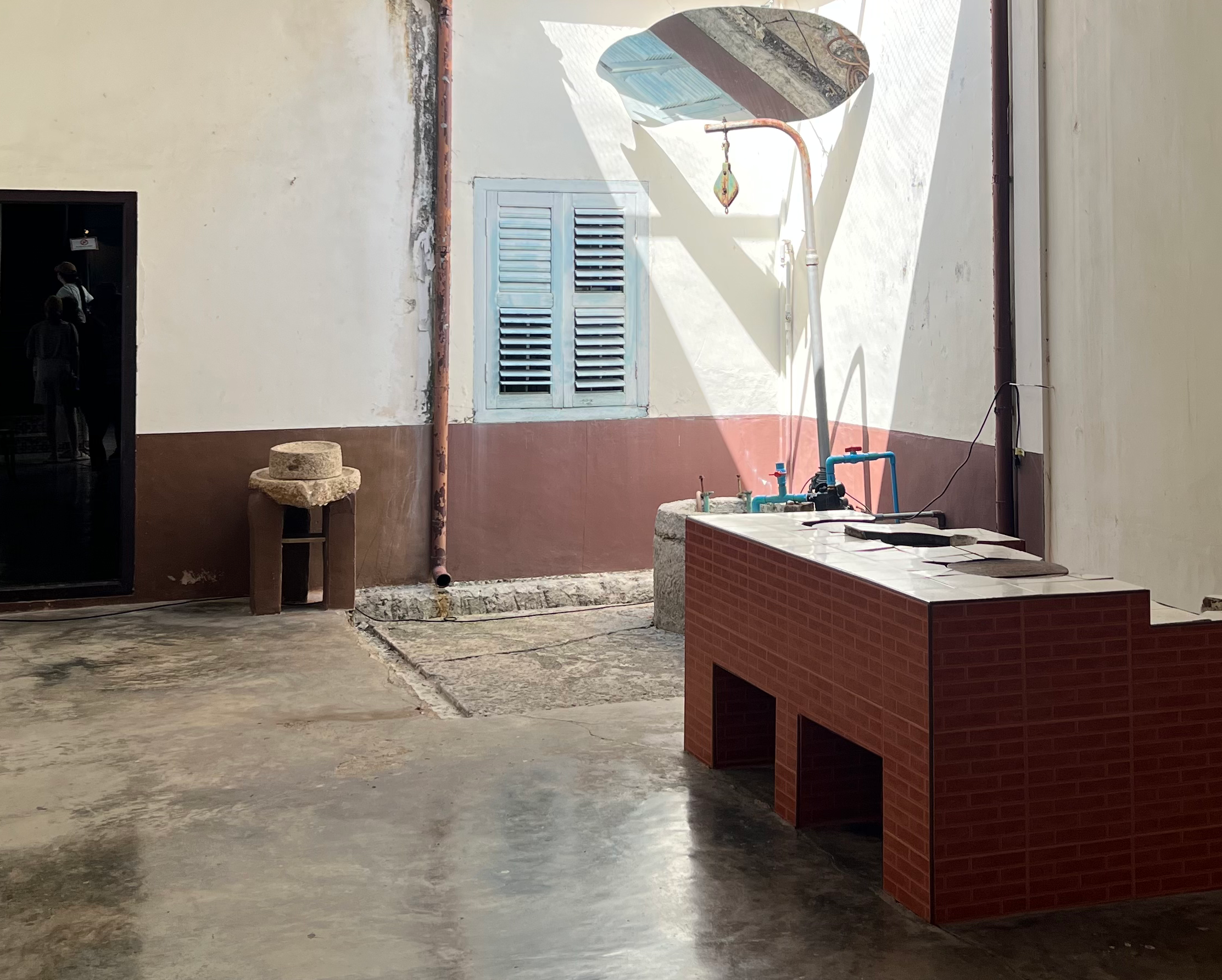
The current Thailand Biennale made extensive use of abandoned buildings and renovation sites, commissioning a wealth of new works. I found myself drawn to the question of how these spaces were ‘cared for’ by the curators. Ideally, this manifests as a profound resonance between the artist’s inspiration and the site’s history, or perhaps through dedicated field research, both guided by the curator’s careful arrangement. This was a triumph in the last Biennale in Chiang Rai, but in Phuket, the connection felt thinner; many sites appeared as nothing more than empty shells for display. Of course, curatorial reality is full of practical constraints. In Phuket, the progress of commissioning artists did not align with the timeline for securing venues, implying that commissioned artists likely had no opportunity to engage with their specific exhibition sites before their works were produced. Furthermore, the scope of their research was not strictly anchored to their assigned locations, as artists were free to explore themes across the wider Phuket region. Coupled with the lack of a strong local art scene, it was hard to find artists with deep roots, and international guests often lacked the time to truly sink into the locale.
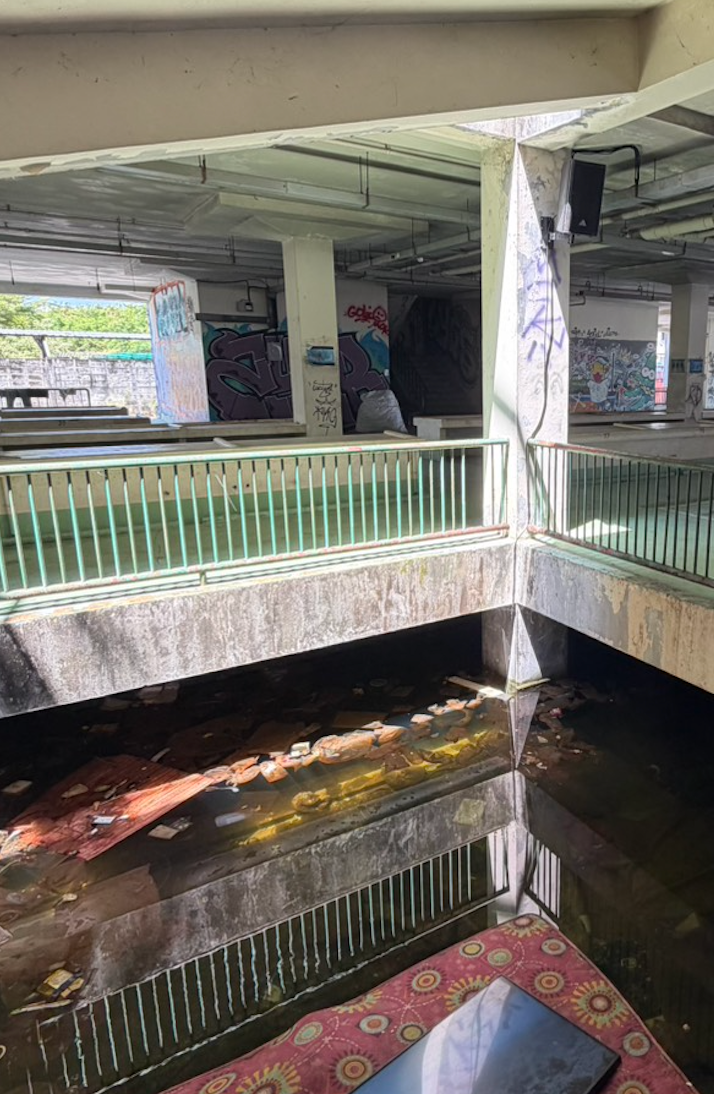
Walking in one of the venues, the Yi Teng Complex, a former slaughterhouse turned abandoned market where once a refuge for the homeless and now a canvas for graffiti, I noticed a red brick wall where one window was roughly boarded up while the other acted as a natural lightbox for conservation photography. The collision — the raw street art versus the attempt to construct a white cube by sealing off the building’s original breath — caught my attention. Between the unwashed graffiti, the cage-like fixtures, and the flooded basement filled with trash and fish, I felt the presence of ‘ghosts’: the echoes of a life that was, and still is, unfolding in these ruins.
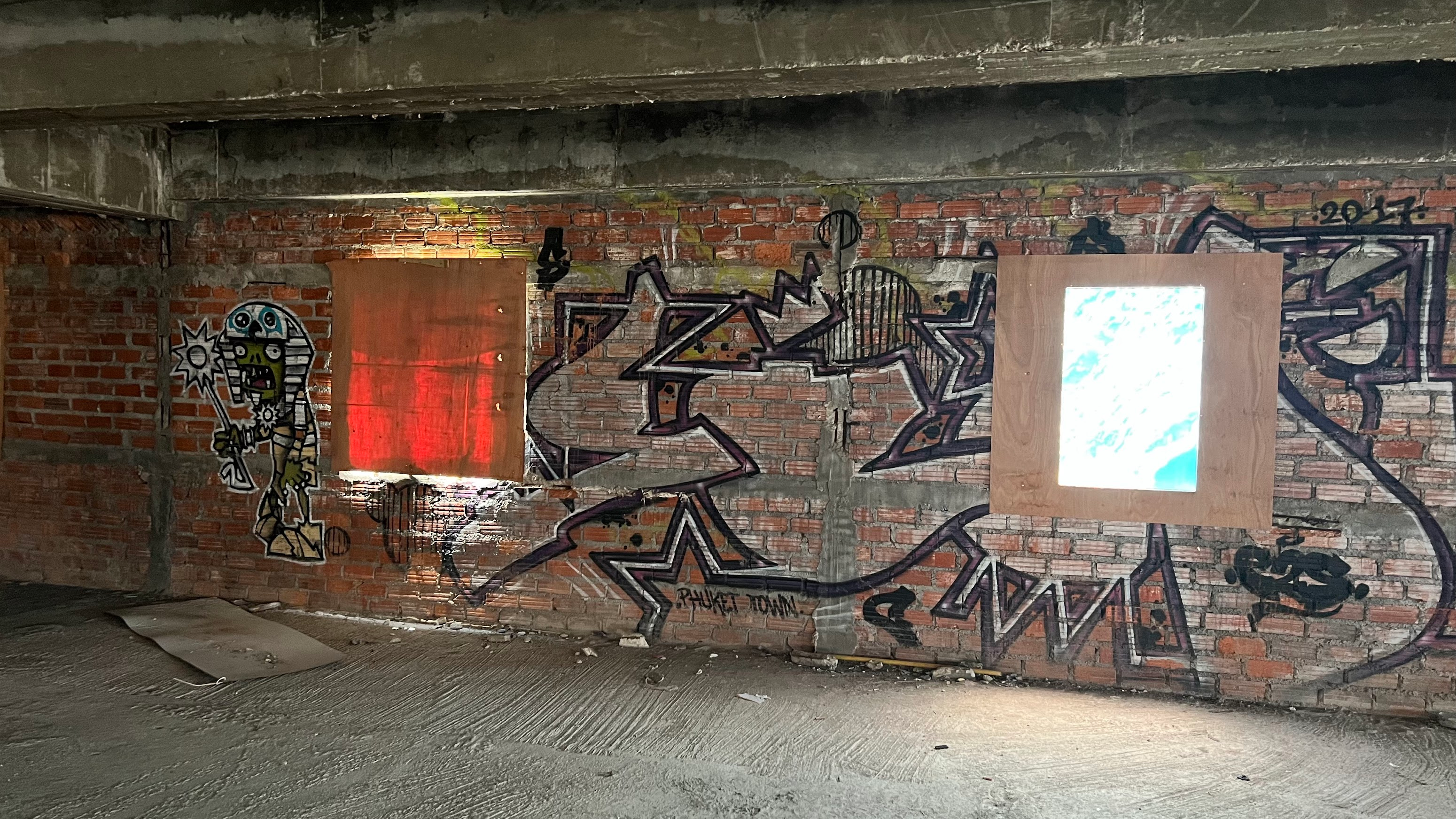
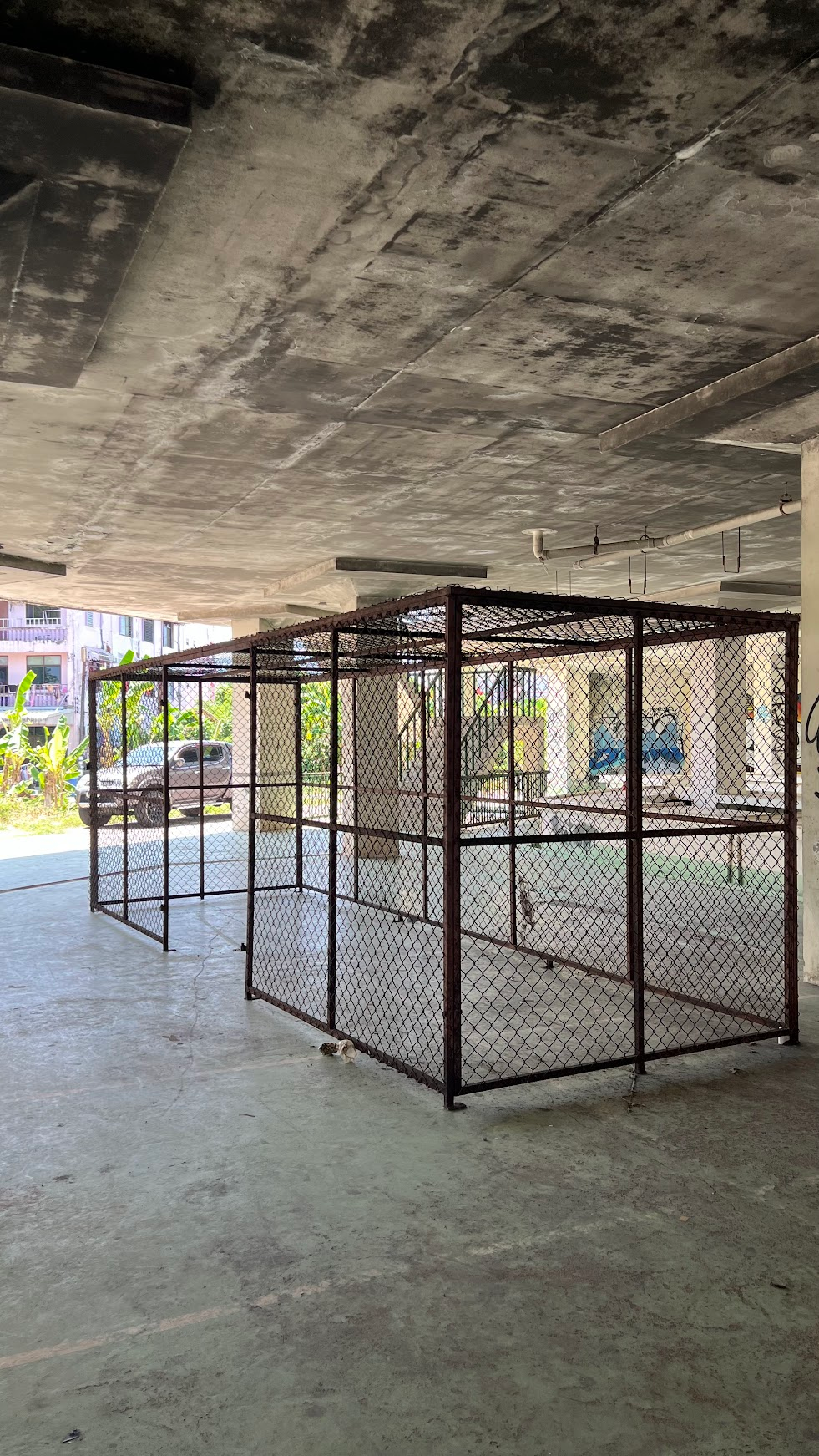
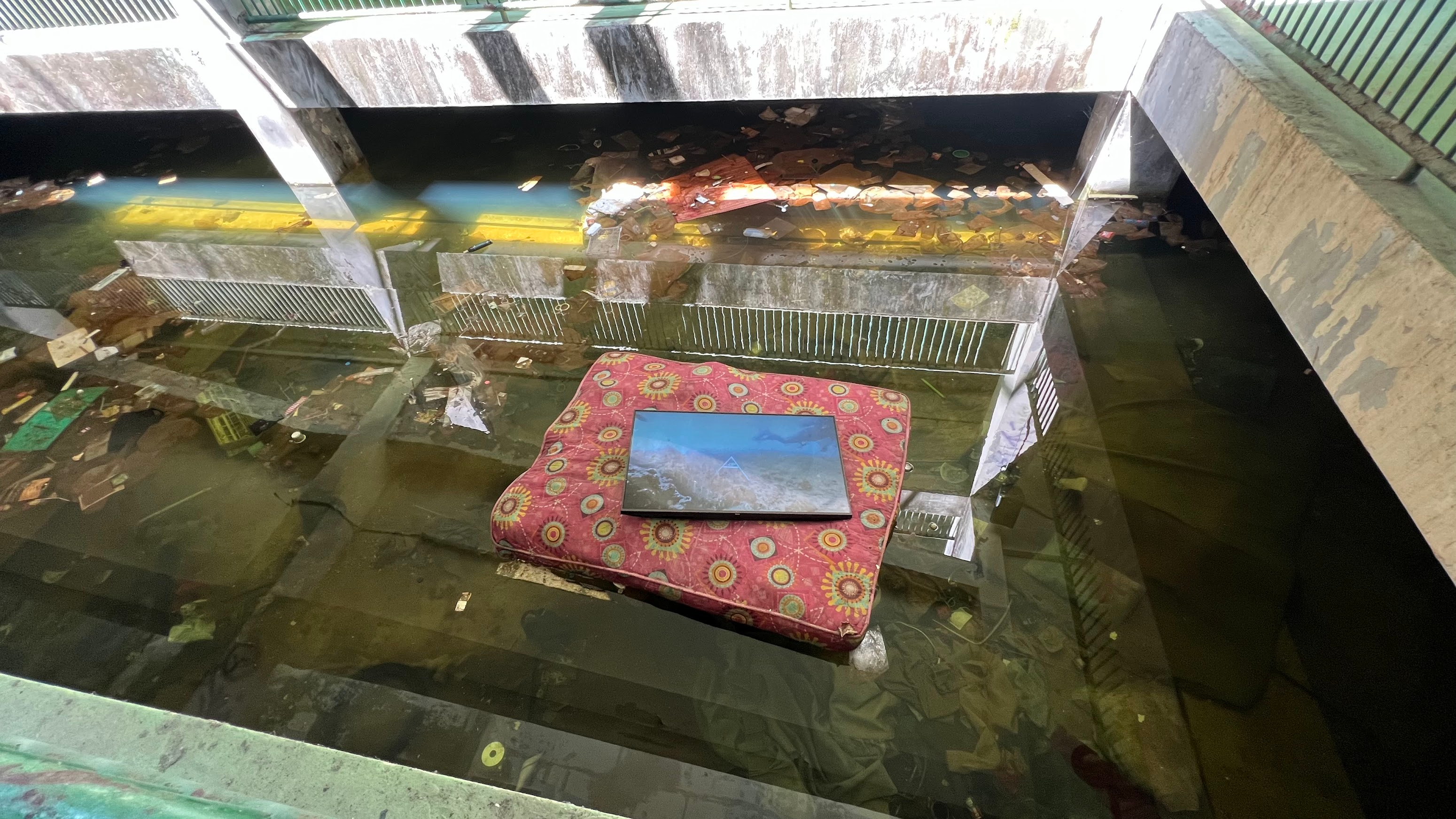
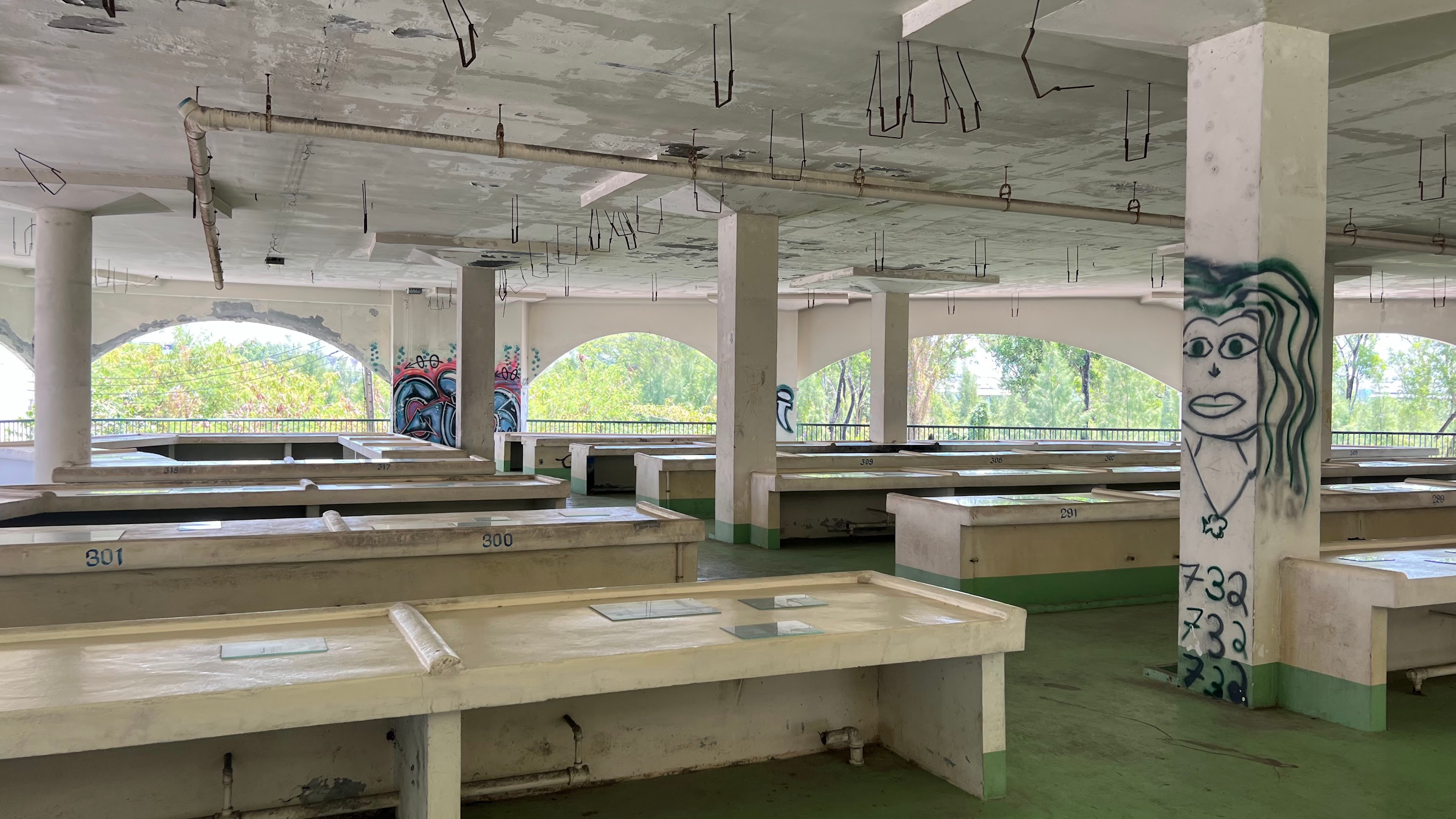
- Yi Teng Complex, Phuket (all photo by author)
I began to wonder: what if we let the ghosts of these ruins tell the story? It would be fascinating to hear these specters comment on how the Biennale has occupied their spaces.
At DC Phuket Town, a traditional shophouse, Araya Rasdjarmrearnsook’s sculptures on the ground floor feel warm and lived-in. Upon entering the old house, the coolness offered by the courtyard stood in contrast to the shimmering heat rising from the streets, instantly evoking memories of summer afternoons in the Taiwanese countryside, an intimacy and nostalgia of visiting my grandparents’ home. These sculptures originated from the dogs Rasdjarmrearnsook lived with in her later years; she once noted that retreating from human society to live among animals allowed her to become more truly herself. Rather than a mere reproduction of companions, the work radiates an aura of home that fills the surroundings. Elevated on furniture supported in mid-air, the dog sculptures cradle memories and the past with a delicate lightness, blending seamlessly into the cozy environment of the shophouse.
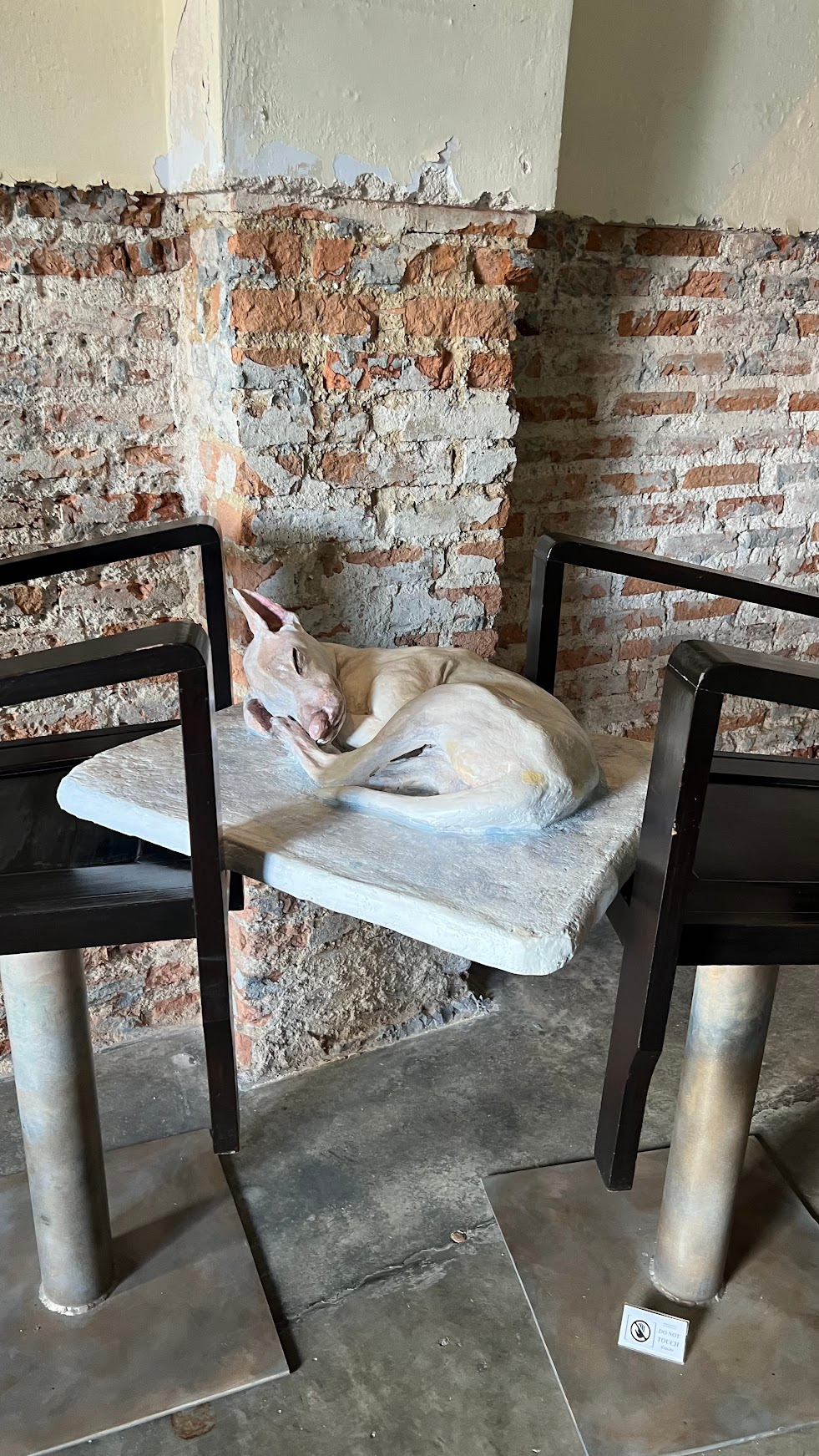
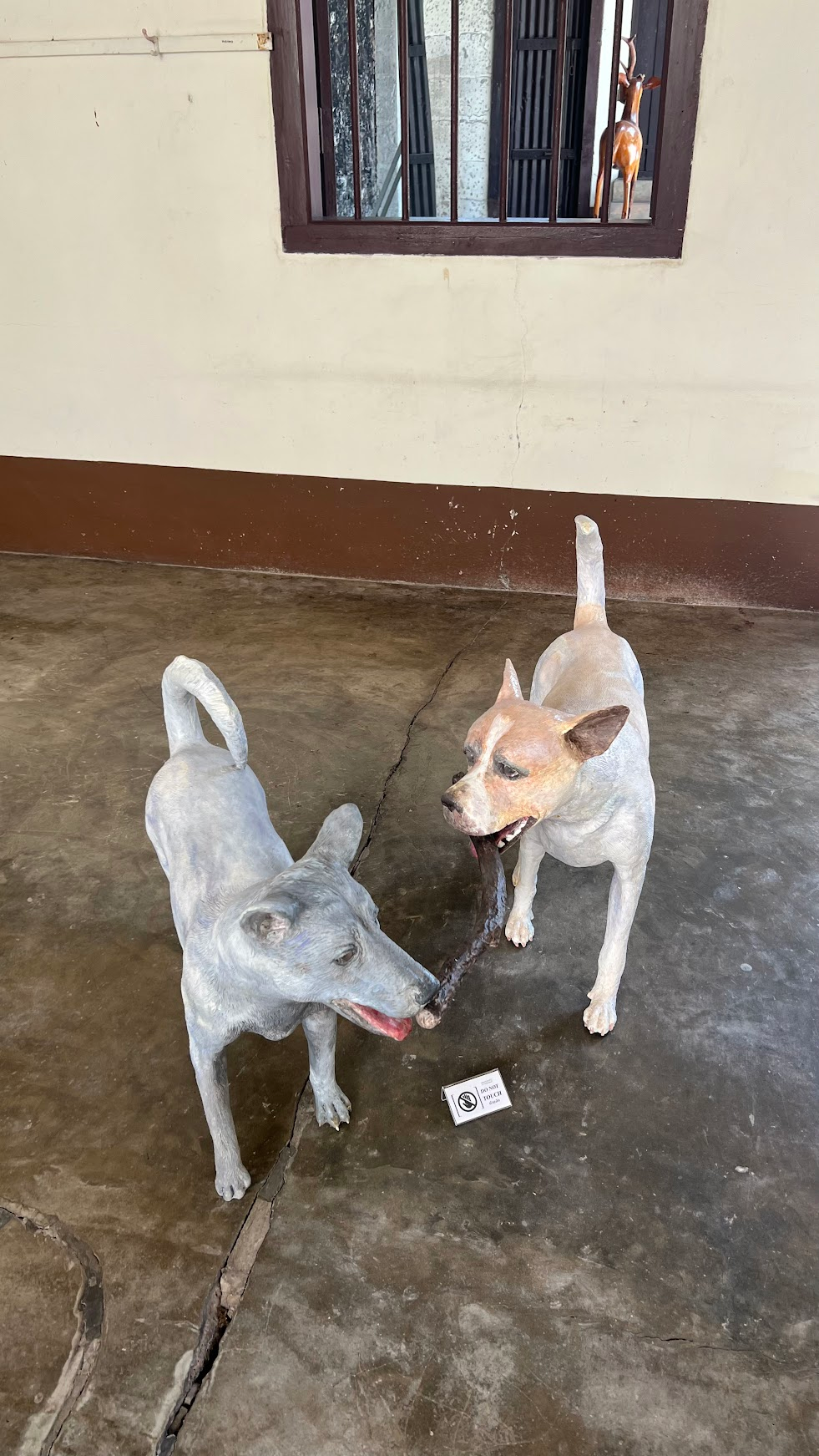
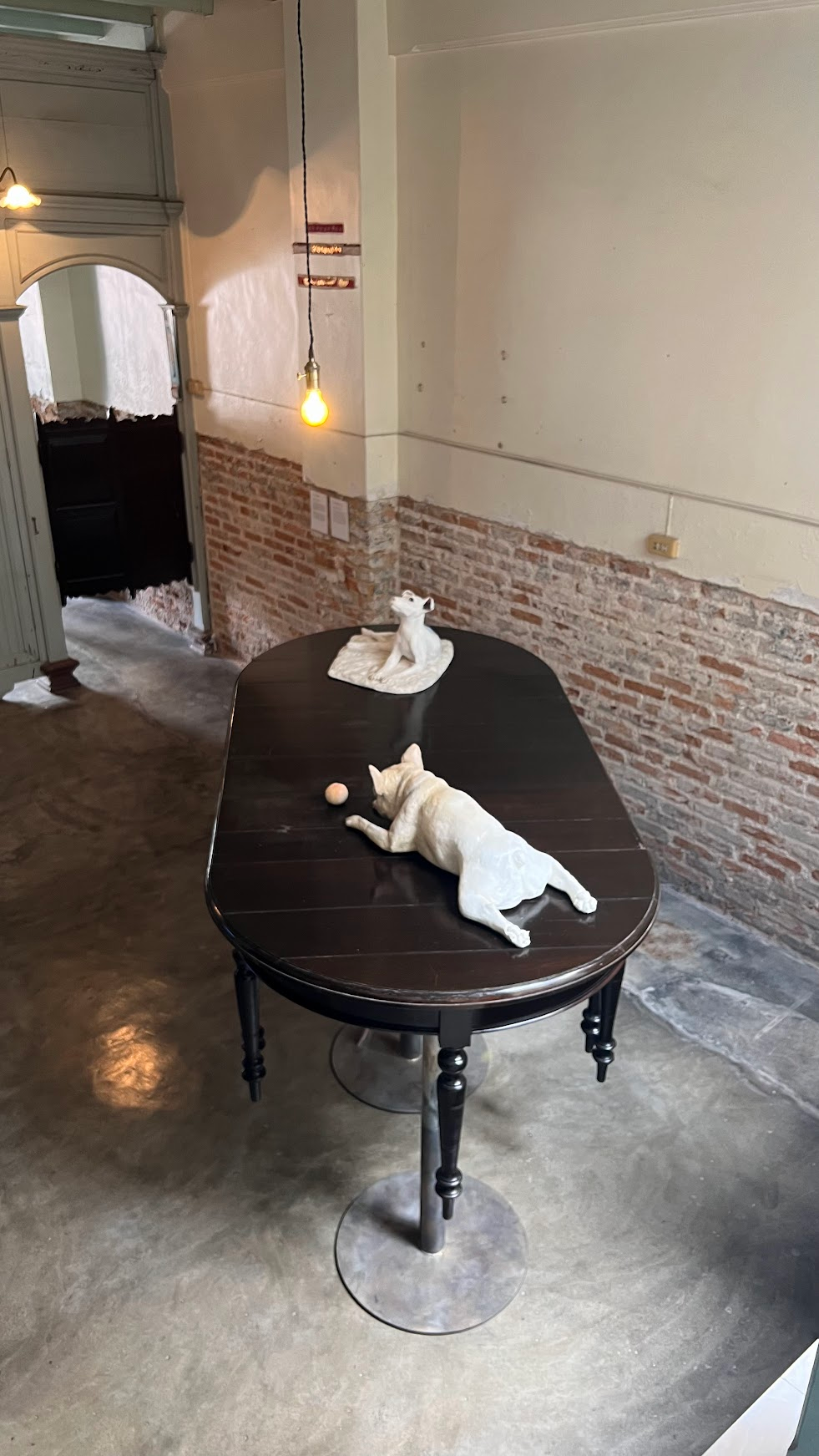
- Sweet Naive Buoyancy series, 2025, Araya Rasdjarmrearnsook (all photo by author)
But as one moves to the second floor, Wilawan Wiangthong’s stark, cyber-themed works on labor fill the space with a jarring palette. The piece explores the struggles of female migrant workers within Phuket’s tourism industry, adopting the visual language of video games, high-tech armor, and science fiction. To me, a far more suitable venue for this work would have been the Imperial 2 Hotel, another Biennale site addressing similar themes through its related history. This sense of dissonance suggests that this commissioned art was not truly in sync with its surroundings — a gap that the ancient spirits of the house might find impossible to bridge.
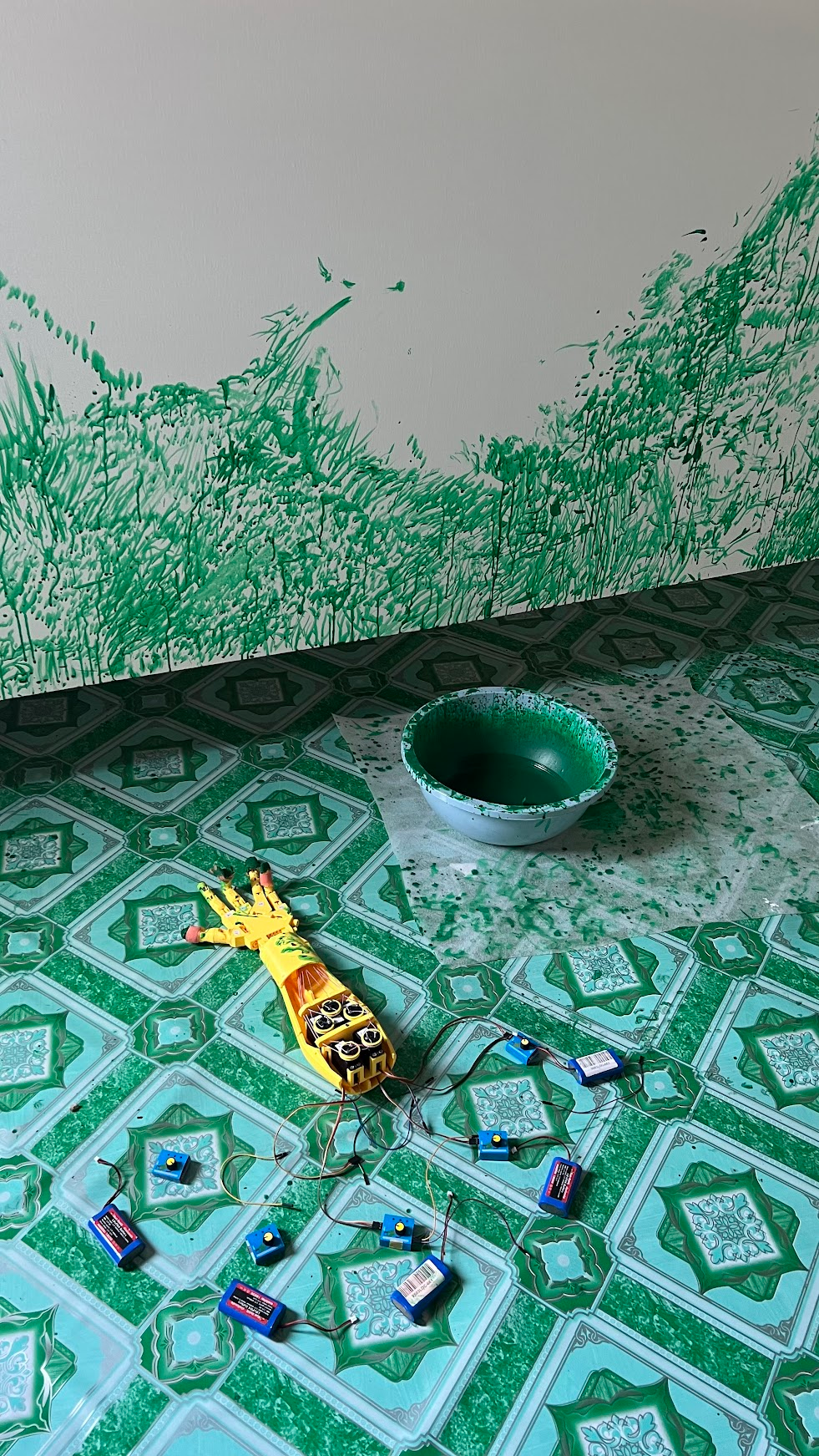
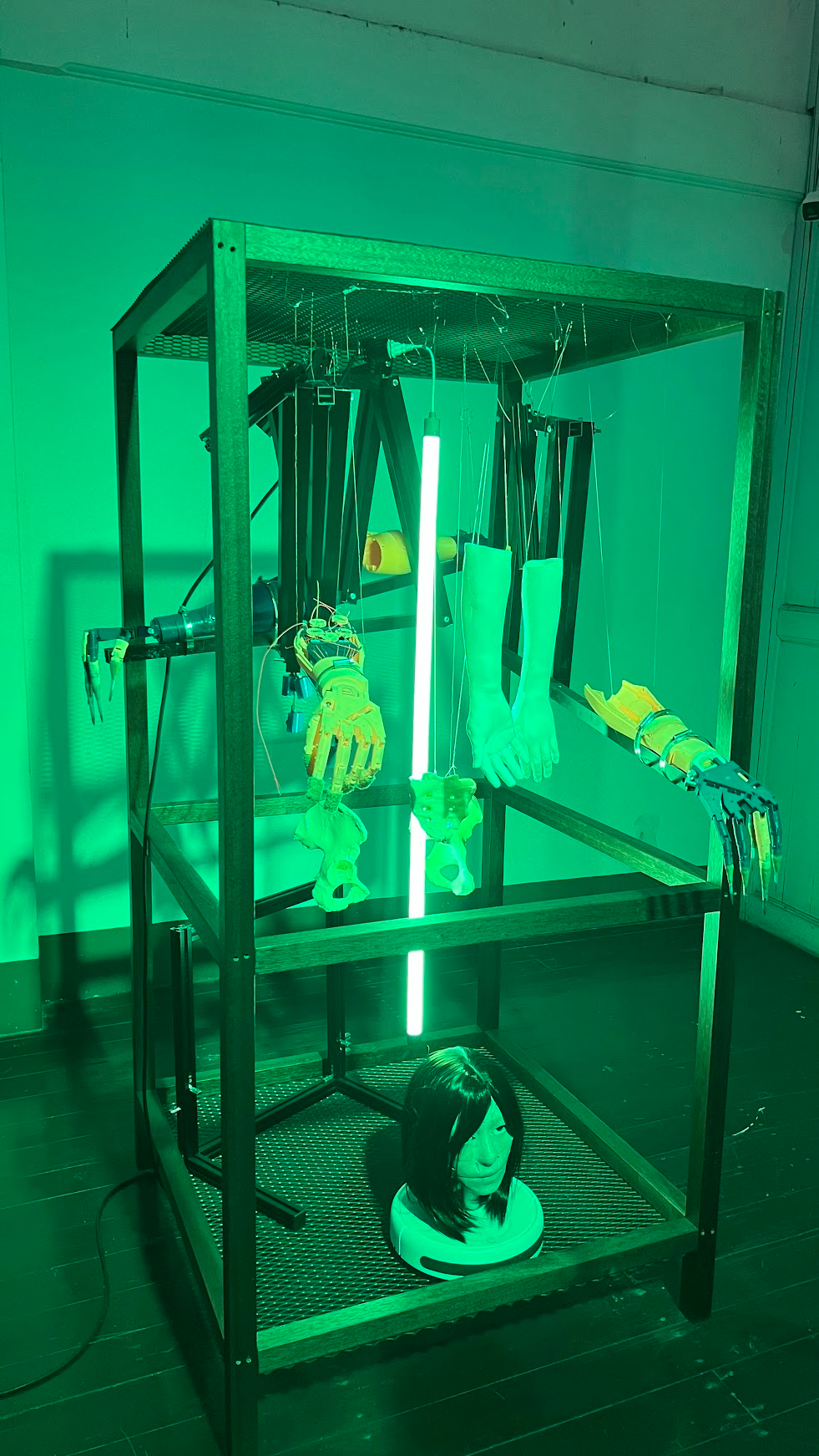
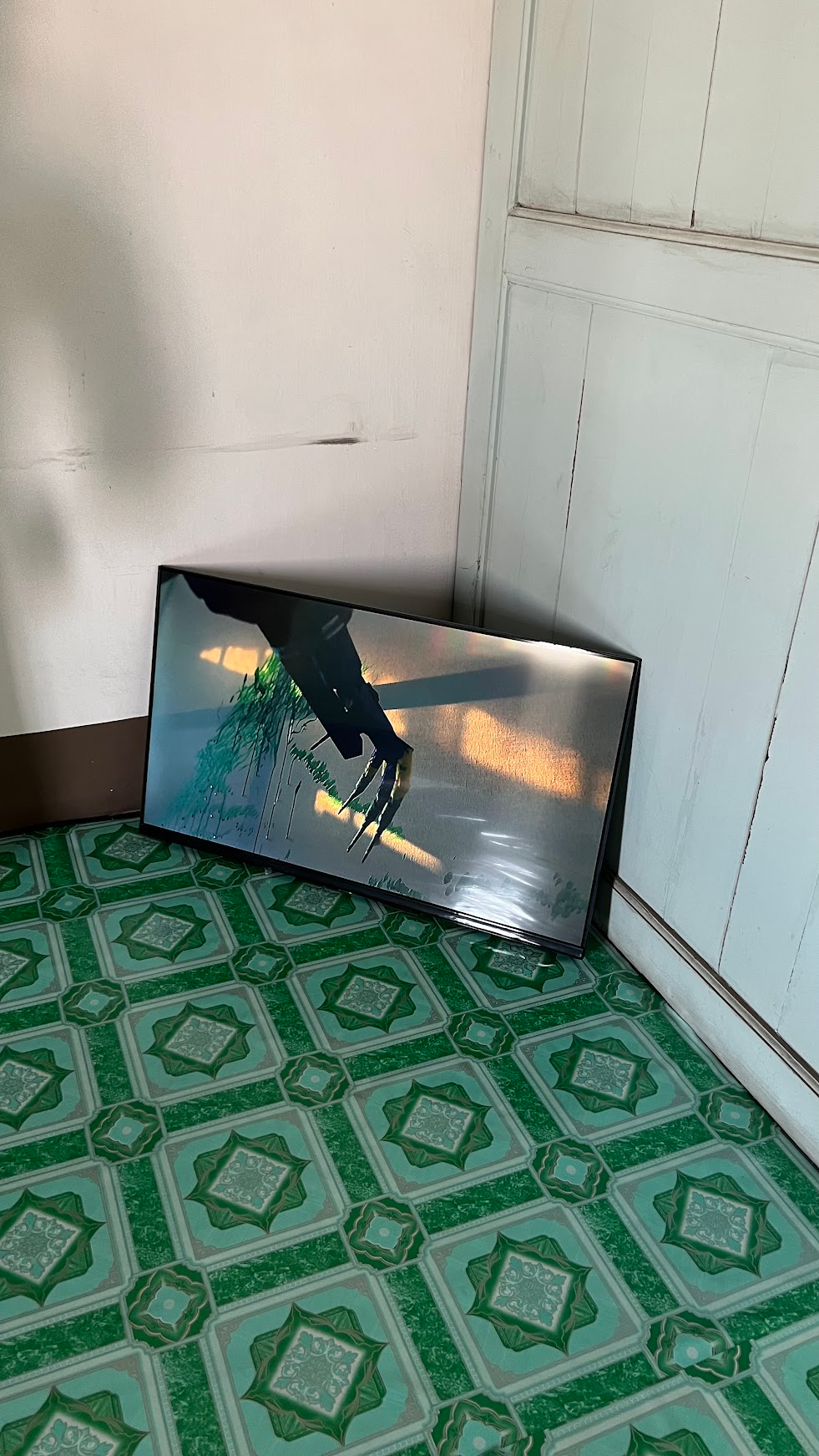
- Titani, 2025, Wilawan Wiangthong (Photo by Author)
Turning back to the Yi Teng Complex, I found three ghosts wandering through the abandoned market. The specters of longing come from the merchants who once anticipated the market’s renovation. Even after it closed, their commercial desire never departed; the cafes and small shops nearby still manifest the restless agitation of these longing ghosts. The spirits of vitality reside in the graffiti, stickers, and symbols that claimed forbidden surfaces to breathe life into the silence. This spirit of self-assertion has never been absent and will continue into the future. The drifting shadows follow those who move between dwellings. Every stop is merely temporary. Even with nowhere to roost, these shadows hold onto memories of the places where they once rested.
Pratchaya Phinthong presents ‘water~copy airstreak,’ a multi-media installation combining video, sound, field research, and ecological intervention at the Yi Teng Complex. The site is filled with the simulated calls of swiftlets and an array of wooden joists installed to encourage these birds to nest and inhabit the space in the future. Furthermore, drawing on recent marine biology research, the artist transmits underwater recordings of healthy coral ecosystems to a decaying reef off the coast of Phuket to accelerate its regeneration. In the exhibition space, underwater footage of this scientific research is projected against the backdrop of the market’s trash-accumulated stagnant water, creating a dialogue with the derelict building’s own aquatic ecology.
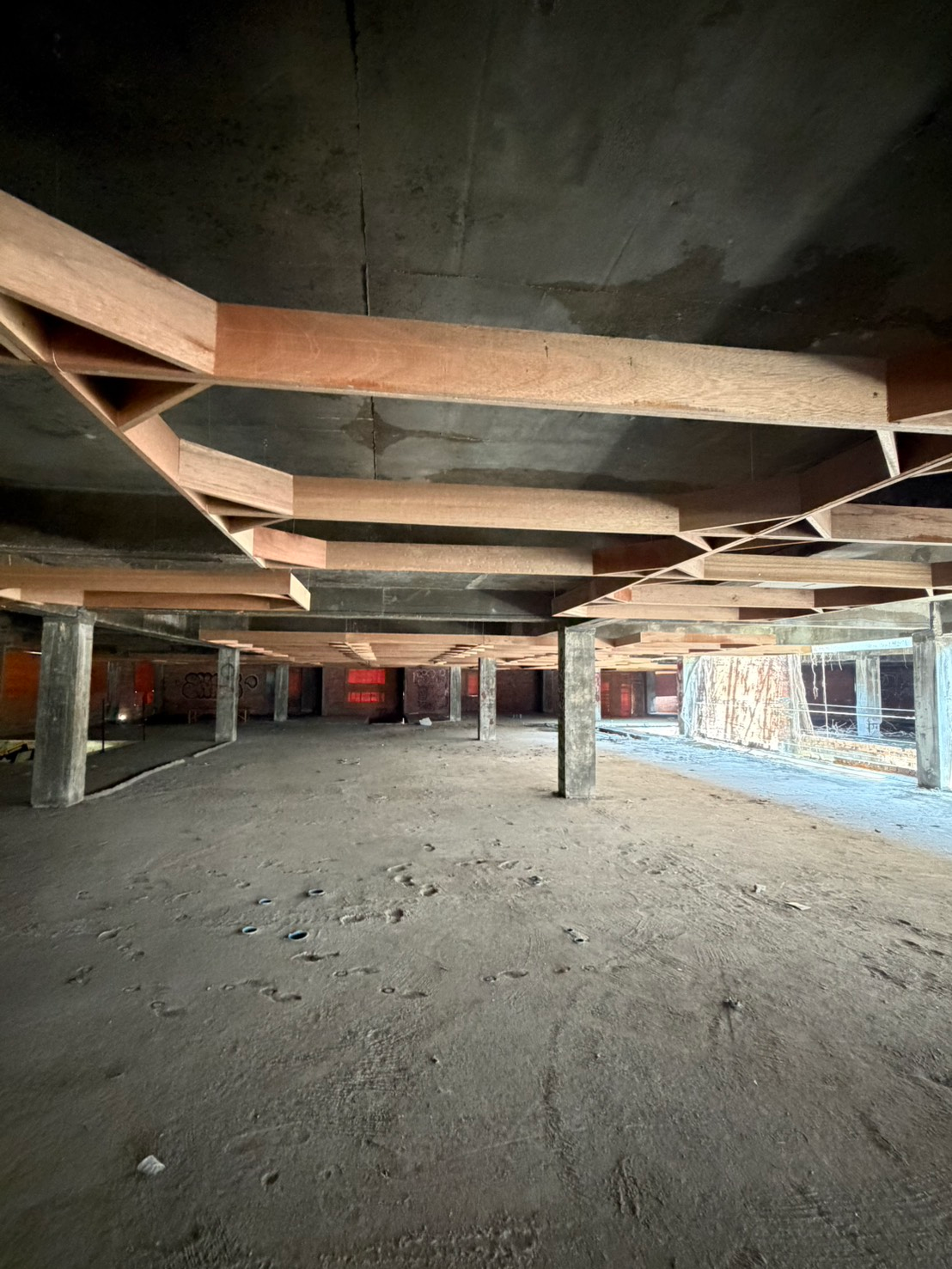
- water~ copy~ air~ streak, 2025, Pratchaya Phinthong (Photo by Elsie Lam)
At first glance, this exploration of “non-human economies and the politics of cohabitation” (as described in the Biennale guide) might seem disconnected from the abandoned market. However, I believe the three spectral forces present at the site find a resonance within this artwork. The choice of swiftlets — a bird whose nests hold economic value — directly echoes the local, unceasing longing for commercial revival. The spontaneous migration and habitation of the swiftlets imprint their presence upon the environment in their own way. The movement of birds through the city mirrors the trajectory of those groups of people perpetually existing in a state of uncertainty within urban civilization. This same desire for survival, the momentum of imprinting oneself, and the constant flux of migration happened in the coral reef regeneration. Seen through the eyes of these ghosts, ‘water~copy airstreak’ becomes a fitting annotation of local history and lived experience. While it cannot fully capture every facet of the site’s hauntings, perhaps these ghosts are willing to quietly observe how the space that once belonged to them is now, through contemporary art, inhabited.
🔺